
Top Dental Milling Outsourcing Services
Why Dental Practices Are Choosing to Outsource Dental Milling
Outsource dental milling is the practice of sending digital restoration files — or physical models — to a specialized milling center that fabricates crowns, bridges, implant bars, custom abutments, and more on your behalf.
Here’s a quick summary of what you need to know:
| Factor | Outsourcing | In-House Milling |
|---|---|---|
| Upfront cost | $0 | $30,000 – $150,000+ |
| Remake rate | ~1.2% | 2–4% |
| Scalability | High | Limited by equipment |
| Material access | Broad (zirconia, titanium, E.max) | Depends on your machine |
| Best for | Variable caseloads, complex cases | High-volume, single-visit needs |
For many restorative practices and dental labs, outsourcing removes a massive financial burden — while actually improving precision and consistency.
But not all milling centers are equal. Mass-production facilities often rush cases, cut corners on design, and deliver restorations that don’t fit well — especially on complex full-arch implant work. That’s exactly where choosing the right outsourcing partner makes all the difference.
This guide breaks down the top dental milling outsourcing services, what to look for, and how to decide what’s right for your practice.
I’m Blake Austin, founder of True Impressions Dental Laboratory and Smile Now Dental Implant Center, with over eight years of experience in dental implants and lab manufacturing — including building out full in-house milling operations for high-volume implant practices. My hands-on background in both lab production and implant sales gives me a unique perspective on when and how to outsource dental milling for the best clinical and financial outcomes.
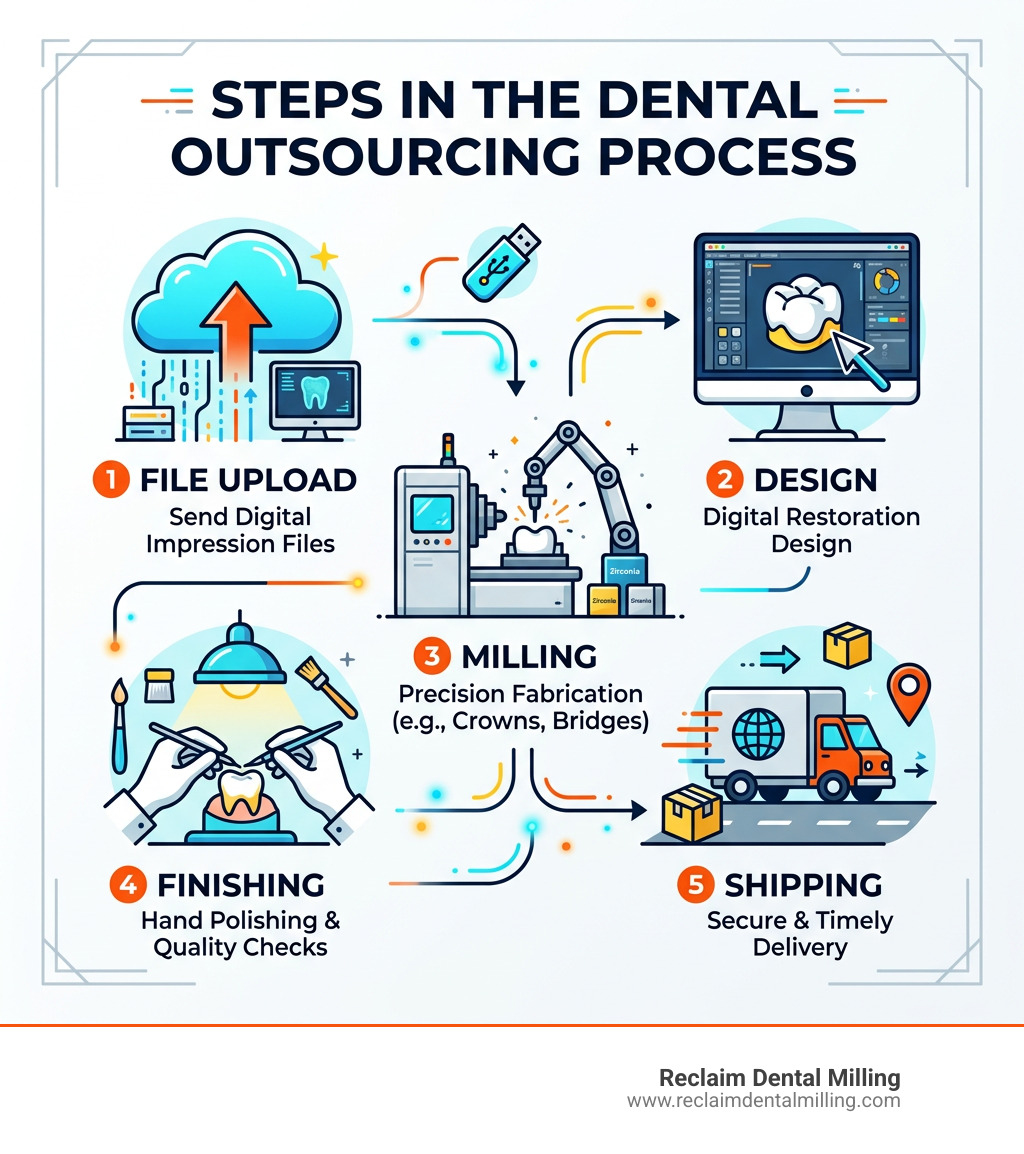
Know your outsource dental milling terms:
The Strategic Decision to Outsource Dental Milling
Deciding whether to keep your production under your own roof or to outsource dental milling to a specialized partner is one of the most significant crossroads a modern dental practice or lab will face. It isn’t just about the “now”; it’s about how you want your business to function three to five years down the line.
When we look at the data, the choice often becomes clearer. In-house milling units, while convenient for same-day crowns, carry a hidden burden. Beyond the initial purchase, there is the constant hum of maintenance, the cost of specialized staff, and the inevitable “oops” moments. Research shows that average remake rates for in-house milling due to machine or calibration issues hover between 2% and 4%. In contrast, a high-end outsourcing milling center often maintains an internal remake percentage as low as 1.2%.
| Metric | In-House Milling | Outsourced Milling |
|---|---|---|
| Initial Investment | $30k – $150k+ | $0 |
| Remake Rate | 2% – 4% | ~1.2% |
| Technology | Often 4-axis / chairside | Industrial 5-axis precision |
| Maintenance | Owner’s responsibility | Provider’s responsibility |
| Staffing | Requires trained tech | “Staff” paid per case |
Why Modern Labs Choose to Outsource Dental Milling
The most successful dental operations we see today prioritize scalability. If you have a sudden influx of 50 cases in a week, an in-house mill becomes a bottleneck. You can’t simply make the machine run faster without sacrificing quality. When you outsource dental milling, you are essentially hiring a “debt-free staff member” who never takes a vacation, doesn’t require health insurance, and only gets paid when there is work to do.
Outsourcing allows you to manage fluctuating caseloads without the stress of underutilized equipment during slow months. It also provides immediate access to specialized expertise. Instead of one technician trying to be a “jack-of-all-trades,” you gain a team of specialists who live and breathe CAD/CAM design and industrial-grade milling every single day.
How to Outsource Dental Milling for Complex Cases
While simple single crowns are the “bread and butter” of many practices, complex cases like All-on-4 and full-arch restorations are where the true value of outsourcing shines. These cases require more than just a standard mill; they require 5-axis milling technology to ensure a “passive fit.”
A passive fit means the restoration seats perfectly on the implants without introducing any tension or stress to the underlying bone or the implant components themselves. Achieving this in-house is incredibly difficult without industrial-grade machinery. By choosing a partner that focuses on boutique craftsmanship, you ensure that even the most complex titanium bars and zirconia arches meet the highest standards of precision.
Financial Impact: Investment Costs vs. Lab Fees
Let’s talk numbers, because at the end of the day, your practice needs to be profitable. The cost of entry for high-quality in-house milling is steep. We aren’t just talking about the $30,000 to $150,000 price tag for the mill itself. You also have to factor in:
- Sintering ovens (for zirconia)
- High-speed scanners
- CAD software licenses (which often have annual “club” fees)
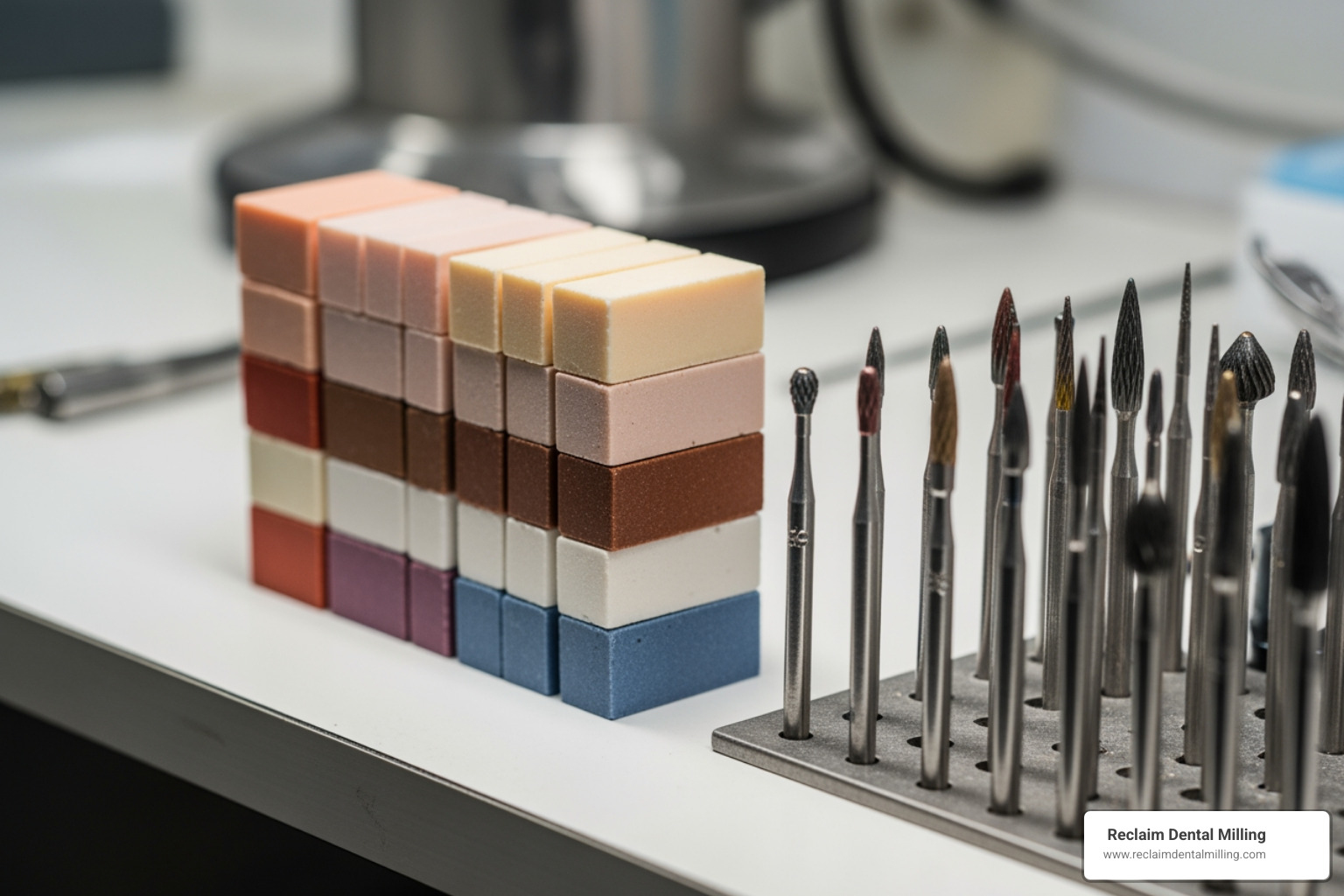
- Milling burs and consumable blocks
- The square footage in your office dedicated to a “wet” or “dry” lab environment
Predictable Pricing Models
One of the biggest headaches of in-house production is unpredictable costs. A spindle breaks? That’s a $5,000 repair. A software update glitches? Your production is down for two days.
When you outsource dental milling, your costs become perfectly predictable. You pay a per-case fee. This “wholesale pricing” allows you to calculate your exact profit margin before the case even starts. It’s a strategy of capital preservation—keeping your cash in the bank rather than tying it up in a depreciating asset that might be obsolete in five years.
ROI Analysis for Small Practices
For a small to mid-sized practice, the ROI on a $75,000 CAD/CAM system can be a tough pill to swallow. Industry analysis suggests that to break even on such a system over five years (assuming 21 workdays a month), the machine costs roughly $62 per day just to sit on your counter. That doesn’t include labor, materials, or electricity.
If your patient volume doesn’t support running that mill 6-8 hours a day, you are losing money. Outsourcing removes the risk of “machine downtime” and allows you to focus on what you do best: clinical dentistry.
Advanced Materials and Technology Access
The world of dental materials is moving faster than ever. From high-translucency multilayered zirconia to Grade V titanium and specialized PMMA for long-term provisionals, staying stocked on every material is an inventory nightmare for a private practice.
Precision and Quality Assurance
When you outsource dental milling, you aren’t just buying a crown; you are buying the quality assurance that comes with industrial standards. Top-tier centers utilize innovative equipment and branded materials from the US and Europe that are FDA-approved.
Furthermore, certifications like DAMAS ensure that the restorations you receive have undergone rigorous quality checks. This level of oversight is what keeps remake rates at that enviable 1.2% mark.
Specialized Restorative Solutions
Outsourcing centers offer a menu of products that most in-house setups simply can’t touch:
- Custom Abutments: Milled from titanium or zirconia with precise gingival contouring.
- Implant Bars: Complex geometries for overdentures that require 5-axis precision.
- Screw-Retained Restorations: Perfect for All-on-X cases where retrievability is key.
- Facial Cutback Crowns: Allowing for hand-layered porcelain esthetics on a strong zirconia core.
The Hybrid Model: Balancing Speed and Complexity
Is it an all-or-nothing choice? Not at all. Many forward-thinking practices adopt a hybrid model. They might keep a small chairside mill for “emergency” single-unit crowns to provide that “wow” factor for patients who need a quick fix. However, they outsource dental milling for everything else—high-volume cases, complex bridges, and any full-arch implant work.
Managing Turnaround Times and Logistics
A common concern with outsourcing is the “wait time.” However, modern logistics have shrunk the globe. With digital file transfers, a milling center can receive your STL or DCM files instantly.
At Reclaim Dental Milling, we pride ourselves on a 3-5 day turnaround. This is often faster than a traditional local lab because we have optimized our entire workflow for speed and precision. Whether you are using a Trios scanner or another open system, the process is seamless.
Risk Mitigation in Outsourcing
To make outsourcing work, communication is king. The potential risks—like shade inconsistencies or shipping delays—are easily mitigated by choosing a reliable partner. Look for providers who offer:
- Digital Feedback Loops: Technicians who call or message you if they see a margin that isn’t clear in the scan.
- Robust Remake Policies: A partner who stands behind their work.
- Standardized Shipping: Flat-rate delivery and reliable tracking so you always know where your case is.
Frequently Asked Questions about Dental Milling
What is the average turnaround time for outsourced milling?
Most high-quality outsourcing centers offer a 3-5 day in-lab turnaround. Some standard cases can even be processed in as little as 3 days, especially if files are uploaded before morning cutoff times.
How do remake rates compare between in-house and outsourced centers?
In-house milling typically sees a 2-4% remake rate due to the challenges of maintaining equipment and training staff. Professional outsourcing centers usually hover around 1.2%, thanks to industrial-grade 5-axis machinery and dedicated quality control teams.
When should a practice transition from in-house to outsourcing?
If you find your staff spends more than 2 hours a day managing the mill, or if your monthly maintenance and material costs are exceeding your projected lab fees, it’s time to transition. Additionally, if you are moving into complex implant dentistry (All-on-4), outsourcing to a boutique center is highly recommended for precision.
Conclusion
Choosing to outsource dental milling is more than a cost-saving measure; it’s a commitment to quality and clinical excellence. By partnering with a center that understands the nuances of 5-axis precision and boutique craftsmanship, you free your practice from the “equipment trap.”
At Reclaim Dental Milling, we specialize in the high-stakes world of All-on-4 and full-arch zirconia and titanium restorations. Based in Phoenix, Arizona, we bring a level of precision and “passive fit” that mass-production labs simply can’t match. We offer a 3-5 day turnaround and a focus on profitability for your practice without inflated pricing.
Ready to elevate your restorative outcomes? Contact Us today or Upload Your Files to start your first case with us. Let’s build something beautiful together.